
The “Iron Triangle” is a concept often used in project management, and it can be applied to software development as well. It represents the three key factors that are interconnected and typically in tension with each other in any project. These factors are:
Scope: This refers to the features, functionalities, and requirements of the software project. It defines what the software will do and what it won’t do. The scope can change as the project progresses, and managing scope effectively is crucial to delivering a successful project. Expanding the scope often leads to increased time and cost.
Schedule: This is the schedule or the timeline within which the software project needs to be completed. It includes milestones, deadlines, and timeframes for different phases of the project. Time constraints can put pressure on the development team and might lead to compromises in scope or quality if not managed properly.
Resources: This represents the budget or resources allocated to the project. It includes the financial resources, as well as the human resources (developers, testers, designers, etc.). Managing costs involves budgeting, resource allocation, and controlling expenses. Overspending or inadequate resourcing can lead to project delays or reduced scope.

The key idea of the Iron Triangle is that these three factors are interrelated, and changes in one factor will affect the other two. For example:
- Increasing Scope without adjusting Time or Cost will likely lead to delays and/or increased expenses.
- Reducing Time without adjusting Scope or Cost may result in a lower-quality product or increased costs due to overtime or additional resources.
- Reducing Resources without adjusting Scope or Schedule may lead to a simplified product or longer development times.
In modern software development, there is often a fourth dimension added to this triangle, which is Quality. The quality of the software is a critical factor and is closely related to the other three factors. Sacrificing quality to meet deadlines or reduce costs can lead to long-term problems, such as increased maintenance and support costs or dissatisfied users. Therefore, balancing quality alongside scope, schedule, and resources is crucial for a successful software project. This extended concept is sometimes referred to as the Iron Quadrilateral.
One observation I’d like to explore with my audience’s experiences is that I’ve noticed a tendency among product managers and user experience designers to prioritize scope, being hesitant to trim down features even when striving to create an MVP that demonstrates customer empathy. Conversely, engineers often resist reevaluating the effort required for tasks mid-project and may request additional team members to meet deadlines. Meanwhile, senior leadership frequently emphasizes adhering to delivery schedules and a Go-To-Market strategy, even when the product and engineering teams lean towards delaying the project to ensure quality. This tension among these three optimization inclinations can potentially compromise the overall quality of the product delivery.
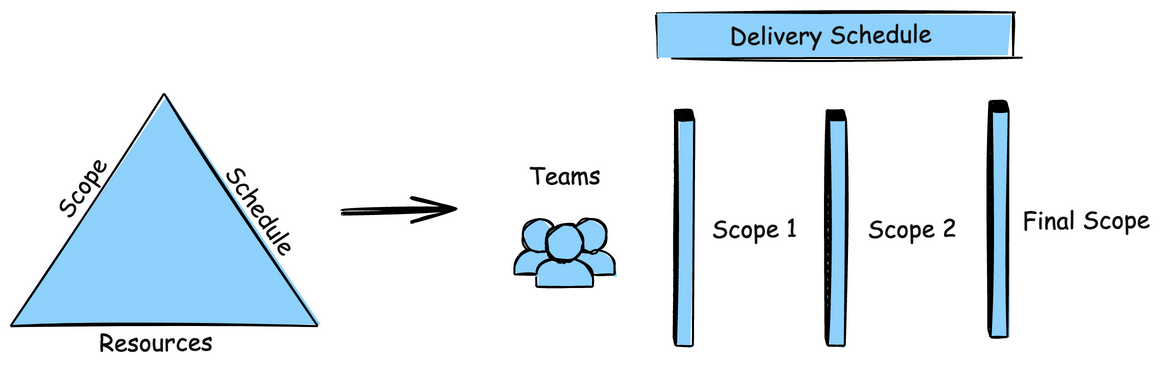
What are the possible remediations then? Here are couple of ideas.
Divide the scope (functionalities, enhancements, bug fixes) into multiple milestones via iterative delivery. Having smaller deliverables will instill confidence in the customer on the eventual deliverables. They won’t be able to say – “but you promised to deliver by this time”, because you delivered something instead of nothing by that promised date. Choose minimum viable product (MVP) over big requirements up front (BRUF).
Convert the resources to high performing long-lived teams so that they consistently improve their capacity to deliver over time. Hiring engineers in a rush often doesn’t solve the capacity problem in the short run as they need to ramp up and gel with the team before being equally productive.
Balancing these factors effectively is essential for successful software development projects. Project managers and teams need to make informed decisions about trade-offs between scope, schedule, and resources, while also considering other important aspects like quality, risk management, and stakeholder expectations.

 Leader's Whiteboard