
In the fast-paced world of business, decision-making can make or break an organization. Amazon, one of the most successful companies of the modern era, has long been admired for its ability to innovate and scale rapidly. A key component of its operational philosophy is a decision-making framework introduced by its founder, Jeff Bezos: the distinction between Type 1 and Type 2 decisions. This approach, outlined in Bezos’ 2015 shareholder letter, provides a structured way to categorize decisions based on their stakes, reversibility, and speed requirements. Understanding this framework not only sheds light on Amazon’s success but also offers valuable lessons for leaders and teams in any industry.
What Are Type 1 and Type 2 Decisions?
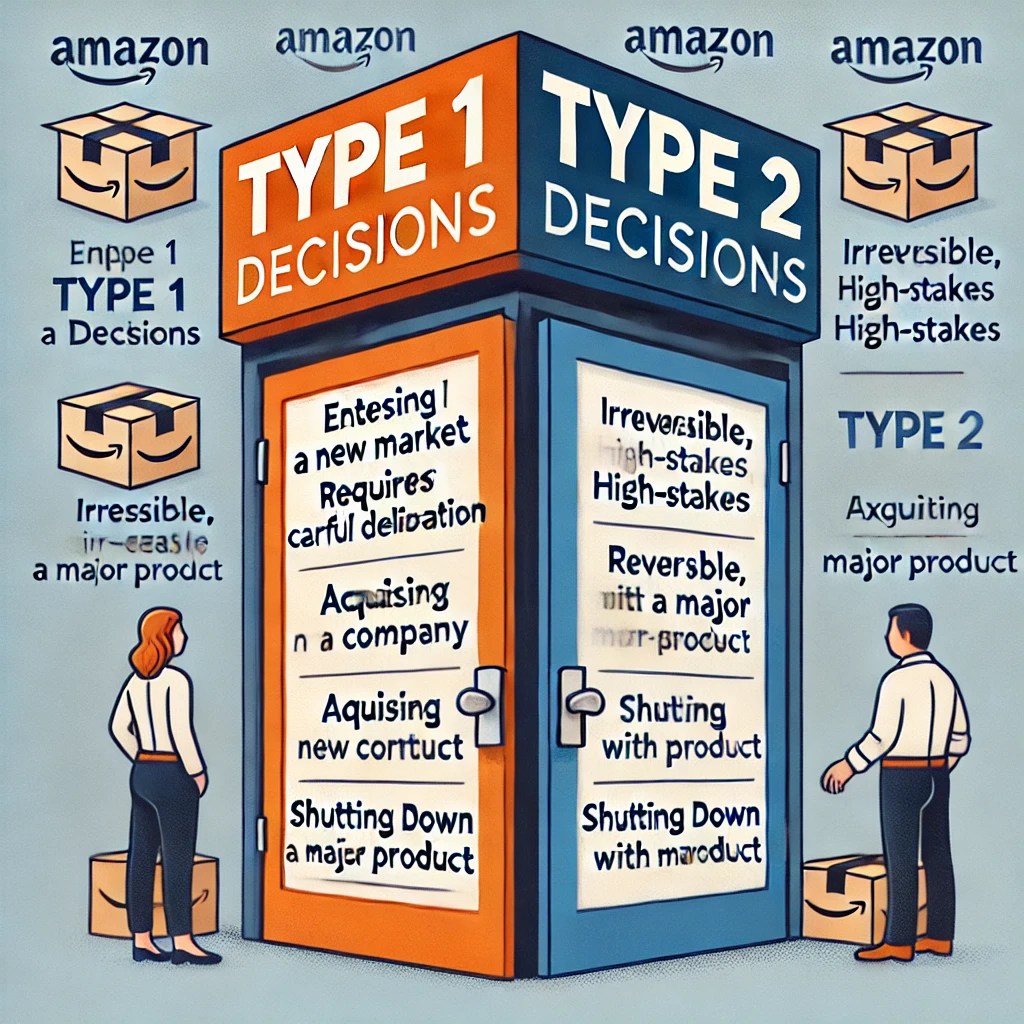
Bezos described Type 1 decisions as high-stakes, irreversible, or nearly irreversible choices—think of them as “one-way doors”. These decisions require careful deliberation, extensive analysis, and often senior-level approval because their consequences are profound and difficult to undo. Examples might include entering a new market, acquiring a company, making fundamental architectural changes to a core system or shutting down a major product line. Because of their weight, Type 1 decisions demand a slower, more methodical process to minimize risk.
In contrast, Type 2 decisions are lower-stakes, reversible choices—akin to “two-way doors”. These can be made quickly, often by individuals or small teams, without extensive oversight. If they go wrong, the impact is limited, and course corrections are relatively easy. Examples include testing a new feature on a website, adjusting pricing for a limited time, changing internal team workflows or experimenting with a marketing campaign. The emphasis here is on speed and agility, allowing innovation to flourish without bureaucratic bottlenecks.
The Philosophy Behind the Framework
The Type 1 vs. Type 2 distinction emerged from Bezos’ observation that as organizations grow, they tend to slow down. Large companies often apply the same rigorous, time-consuming process to every decision, regardless of its magnitude. This “one-size-fits-all” approach stifles experimentation and delays progress. Bezos argued that failing to differentiate between these decision types leads to inefficiency and missed opportunities, particularly in a competitive landscape where speed is a strategic advantage.
At Amazon, the goal was to preserve the nimbleness of a startup even as the company scaled into a global giant. By empowering employees to make Type 2 decisions quickly and reserving Type 1 decisions for deeper scrutiny, Amazon created a culture that balances prudence with boldness. This framework aligns with the company’s broader leadership principle of Bias for Action, which encourages decisive moves when the cost of inaction outweighs the risk of failure.
Beyond Amazon
This framework isn’t just for tech giants. Startups can use it to prioritize scarce resources, while enterprises can cut through red tape. A marketing team might treat a complete rebrand as a Type 1 decision but tweak email copy as a Type 2 decision. The key is clarity: train teams to spot the difference, delegate wisely, and review outcomes efficiently.
Watch Out
This approach isn’t flawless. Misclassify a decision, and you risk either reckless haste or unnecessary delays. Empowering teams also requires a culture of trust, which not all organizations have. Amazon’s Fire Phone flop is a reminder that speed without foresight can lead to failure. However, the lesson remains that taking calculated risks and embracing reversibility can drive innovation.
Takeaway
Amazon’s Type 1 vs. Type 2 framework is a blueprint for smarter choices. As Bezos said, “Being wrong may be less costly than you think, but being slow is expensive for sure.” Next time you face a decision, ask yourself: is this a one-way or a two-way door? The answer could unlock faster, bolder progress for your business.


